

A job interview is more than just a meeting – it’s your opportunity to shine, connect, and step into the next chapter of your career. Whether you’re preparing for your first interview or your fiftieth, this guide will help you understand what to expect, how to prepare, and how to answer questions with clarity, confidence, and faith.
- What is a Job Interview?
- Types of Job Interviews
- Common Types of Job Interview Questions
- The Most Common Job Interview Questions (and How to Answer Them)
What Is a Job Interview?
A job interview is a conversation between a job seeker and an employer or recruiter to determine if there’s a mutual fit. It allows the employer to evaluate your skills, experience, and personality – and gives you the chance to learn about the company and the role.
Think of it as a two-way street: not just “Will they hire me?” but also, “Is this a place where I can grow and contribute?”
Biblical Insight: “Commit to the Lord whatever you do, and He will establish your plans.” Proverbs 16:3
DID YOU KNOW???
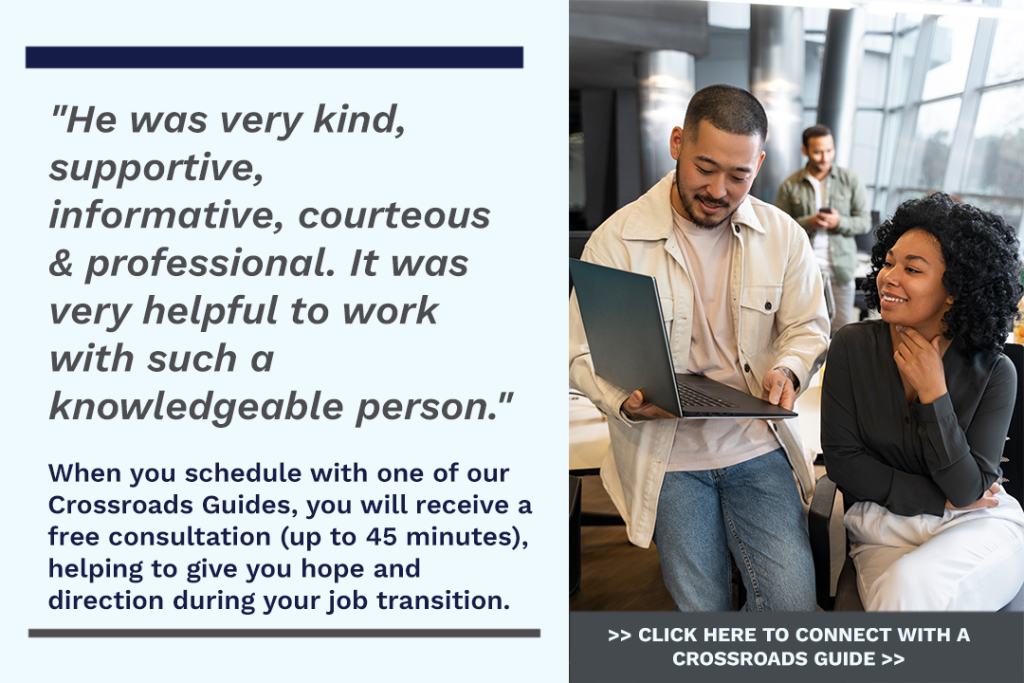
You can get free career guidance with one of our Crossroads Guides! When you schedule with one of our Crossroads Guides, you will receive a free consultation (up to 45 minutes), helping to give you hope and direction during your job transition. Click here to Connect with a Crossroads Guide for a free 45 minute consultation.
Types of Job Interviews
Different roles and companies use different interview formats. Here are the most common:
- In-Person Interviews: Traditional face-to-face meetings, often at the company office.
- Phone Interviews: Initial screening interviews by phone, often to narrow down candidates.
- Virtual Interviews: Conducted via video platforms like Zoom or Microsoft Teams.
- Panel Interviews: A group of interviewers meets with you at once.
- Group Interviews: You and other candidates are interviewed together.
- Behavioral Interviews: Focused on your past experiences and how you’ve handled specific situations.
- Case Interviews: Common in consulting and tech, these evaluate problem-solving abilities.
Tip: Reflect on which formats challenge you most and prepare accordingly. Confidence comes from preparation.
Common Types of Job Interview Questions
Interviewers typically ask a blend of the following:
- Icebreaker Questions: To get the conversation flowing (e.g., “Tell me about yourself”).
- Behavioral Questions: “Tell me about a time you…”
- Situational Questions: “What would you do if…”
- Technical Questions: Specific to your skills or industry.
- Cultural Fit Questions: To assess if your values align with the company.
Curious how to handle creative or unexpected questions? Take a look at our blog How to Answer: “If You Were a Tree…”
The Most Common Job Interview Questions (and How to Answer Them)
Here are some frequently asked questions and simple strategies to help you shine:
1. Tell me about yourself.
Structure your answer with the Present-Past-Future format:
- Present: Where you are now professionally
- Past: How you got there
- Future: Why you’re excited about this opportunity
Need help crafting a great response? Check out this guide on how to master your Two-Minute Drill.
2. Why do you want this job?
Show you’ve researched the company and explain how your goals align with their mission.
3. What are your strengths?
Mention 2-3 strengths with real examples of how you’ve used them.
4. What are your weaknesses?
Be honest, but strategic. Choose something you’re actively working on.
Example: “I used to struggle with delegating tasks, but I’ve been learning to trust my team and now use project management tools to stay on track.”
Need a clear framework for answering this question well? Here’s a guide on how to answer “What are your weaknesses?” with authenticity and confidence.
5. Where do you see yourself in 5 years?
Talk about your desire to grow, learn, and contribute—not just climb the ladder.
6. Do you have any questions for us?
Always say yes. Ask about team dynamics, company culture, or growth opportunities.
Tip: Pray before your interview for peace, clarity, and favor (Philippians 4:6-7).
How to Answer the Toughest Question: “What Are Your Weaknesses?”
This question often trips people up, but it’s actually an opportunity to show self-awareness and growth.
DO:
- Share a real but non-critical weakness
- Explain how you’re addressing it
- Show progress and commitment
DON’T:
- Say “I work too hard” or “I’m a perfectionist”
- Claim to have no weaknesses
Biblical Insight: “My grace is sufficient for you, for My power is made perfect in weakness.” 2 Corinthians 12:9
7 Practical Tips to Wow Your Interviewer
- Research the company and tailor your answers to their mission.
- Prepare real-life stories using the STAR method (Situation, Task, Action, Result).
- Practice your body language: smile, maintain eye contact, sit tall.
- Dress appropriately for the role and industry.
- Ask thoughtful questions that show curiosity and enthusiasm.
- Send a thank-you note or email within 24 hours.
- Pray and reflect before and after the interview.
Final Encouragement
An interview is not just a test—it’s a step in your calling. God sees your heart, your preparation, and your potential.
Even if the door doesn’t open immediately, trust that He is guiding you to the right opportunity.
“I will instruct you and teach you in the way you should go; I will counsel you with my loving eye on you.” —Psalm 32:8
If you need help with your job search, career direction, or spiritual encouragement, connect with a Crossroads Career guide today.
Will Graham is the founder and principal of William Graham Agency, a consulting firm that specializes in helping organizations grow in influence and scope. He has been involved at high levels with other faith-focused entities, including Ministry Brands, where he served as General Manager; and with Campus Crusade for Christ, where he served on the Executive Team for the publishing and materials distribution division. His current clients include several thought leaders and best-selling authors who want to make a bigger impact on their spheres of influence. Will helps Crossroads think through and execute on a high level plan for sustainability. This includes projects related to organizational development, fundraising, and expanding the ministry’s reach and awareness.
Connect with a Crossroads Guide
We would love to help you by setting up a time to talk to someone who can provide personalized career assistance.
